
Structural Bodywork and Structural Integration
I run a busy, dedicated clinical practice from my home in Mandurah, offering Structural Bodywork and Structural Integration. I also travel and teach so my availability is limited.
I arrange appointments by phone rather than online booking. Call 0410 990 869.
I like to have a conversation first, to hear your story, understand you, and to make sure the work I offer is the right fit for you. This initial contact is important to me. It ensures that when you come into the clinic, we begin with clarity, intention, and a shared understanding of what you’re hoping to achieve.
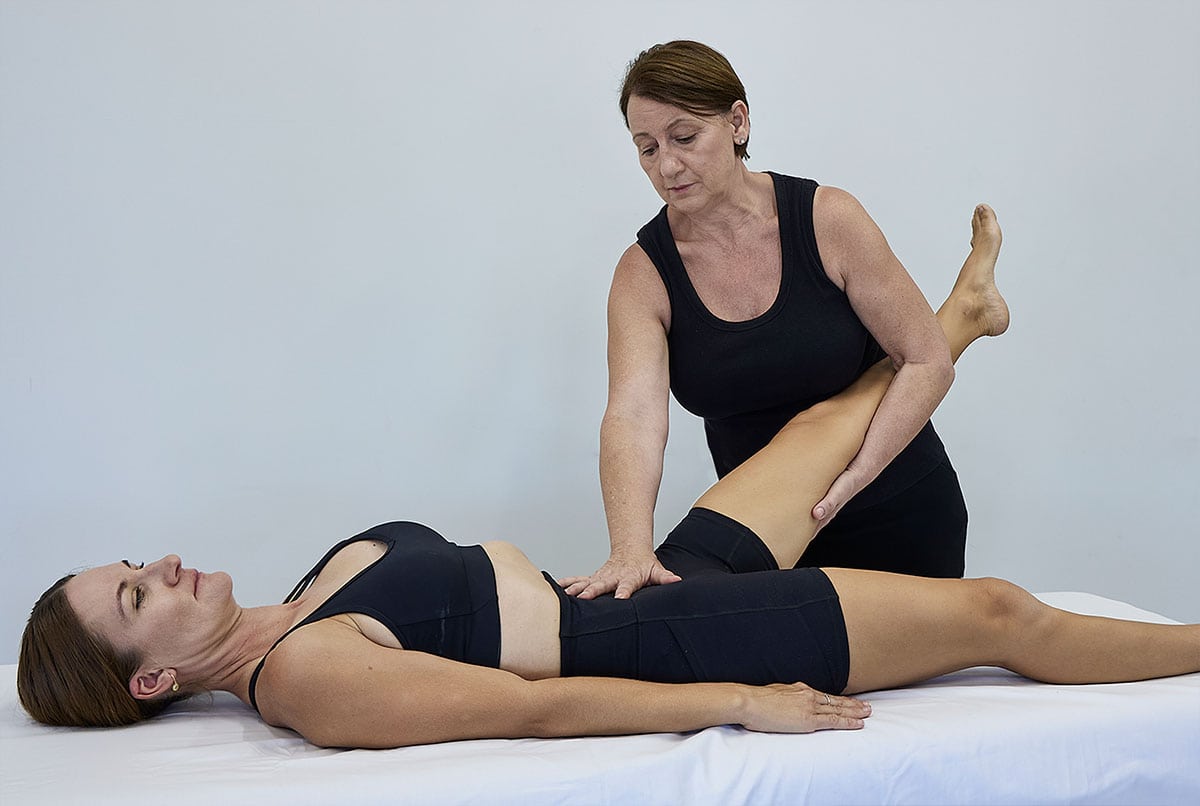
Structural Bodywork
Structural Bodywork is a blend of Remedial and Sports massage and Structural Integration. It combines focused hands-on treatment with a broader structural lens.
Each session begins with a detailed assessment. I look at posture, movement, and gait to understand how you are organising yourself in gravity. We explore where you may be restricted, compressed, or overworking – and how that might be affecting your function. From there, I develop a strategy that is specific to you.
This work can be a one-off session or part of a short series. It’s ideal if you’re looking for a whole-body approach without committing to the full Structural Integration process.
Treatment involves myofascial techniques and movement exploration to improve freedom, awareness, and ease. You will be reassessed throughout the session, and I’ll provide exercises and simple self-release strategies to support you at home.
Clients often report reduced pain, smoother movement, and a feeling of being lighter, taller, and more comfortable in their bodies.
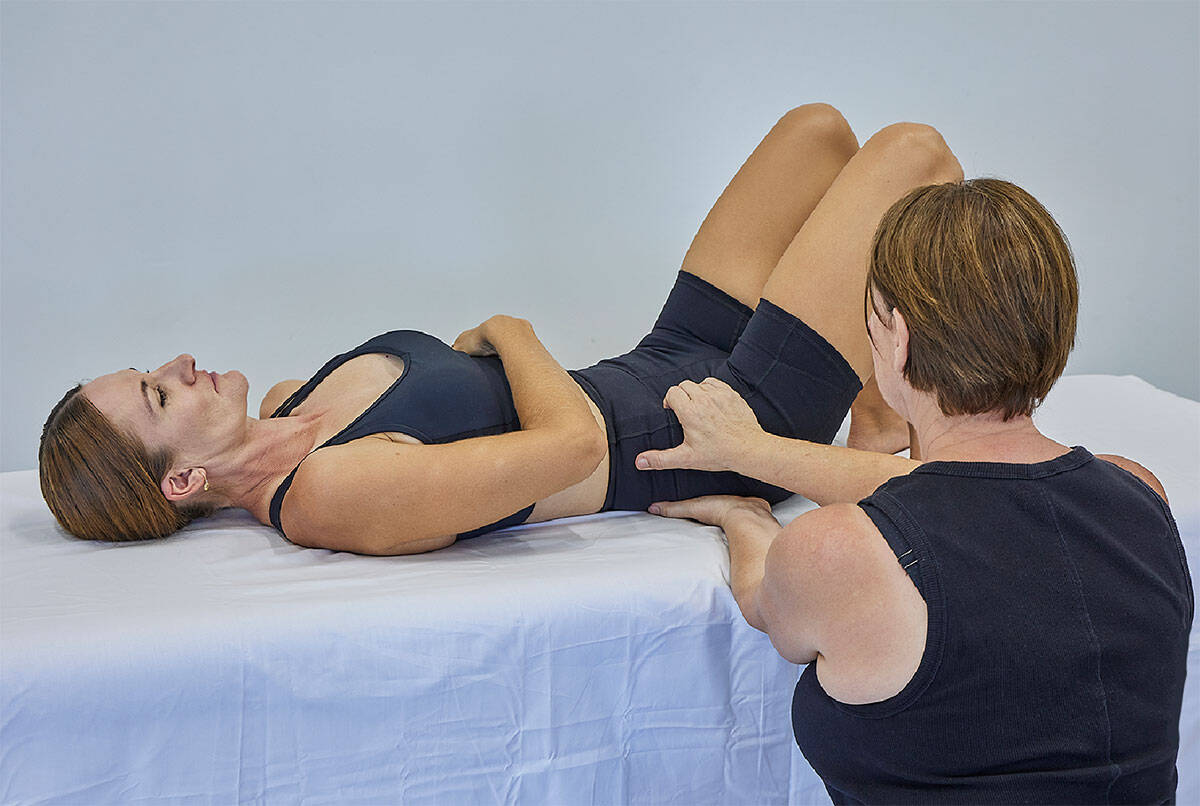
Structural Integration
What is Structural Integration (SI)?
Thomas Myers developed Anatomy Trains Structural Integration (ATSI) from the pioneering work of Ida Rolf. It is a comprehensive form of bodywork that combines skilled manual therapy with movement re-education to reorganise the body’s structure as a whole.
Structural Integration is not simply a technique – it is a process and every session is unique for every person.
It looks at the entire person, not just isolated symptoms.
Rather than chasing pain, SI explores:
- how your body is organised in gravity
- where tissues are held, shortened, compressed, or over-working
- how your structure affects movement, breath, and coordination
- how long-held patterns reflect injury, surgery, repetitive habits, or life stress
During treatment, fascial techniques are used – but the work is never just fascia.
It also influences:
- Muscles
- Connective tissues
- Joint relationships
- The nervous system
- Emotion, how you understand yourselfThe goal is fluidity, adaptability, and support – not forcing the body into an artificial “perfect posture,” but helping it find its own natural balance.
What Does ATSI Involve?
ATSI is delivered as a 12-session progressive series, with each session building on the last.
- Sessions are approximately 75 minutes
- Typically done in underwear or swimwear
- Each session includes hands-on work and postural/movement assessment
- Photographs may be taken at the beginning and end of the series (and sometimes during) to observe structural change – not to impose an ideal posture
How Often?
Frequency varies. Your body needs time to integrate each session.
Too close together and it cannot process; too far apart and momentum is lost.
Listening to your body is key.
The 12-Session Structure
1. THE SLEEVE SESSIONS (Sessions 1-4)
Focus: Surface layers of the body
- Freeing the front, back, and sides
- Releasing shoulders from the trunk
- Improving breath
- Establishing support through the feet
These sessions prepare the body by creating space and mobility.
2. THE CORE SESSIONS (Sessions 5-8)
Focus: Deeper stabilising structures
- Working closer to the spine
- Addressing central support
- Unwinding hidden rotations
- Finding internal support
These sessions include intra-oral and intra-nasal work.
3. THE INTEGRATION SESSIONS (Sessions 9-12)
Focus: Whole-body coordination
- Integrating core and sleeve
- Improving coordination and posture
- Supporting efficient, effortless movement
The aim is that the new alignment becomes part of who you are – not something you must consciously hold or repeatedly maintain.
Who Is It For?
Structural Integration is for anyone wanting to feel lighter, freer, and more comfortable in their body.
People seek SI for:
- Chronic pain
- Sports injuries
- Pelvic pain and dysfunction
- Scoliosis
- Plantar fasciitis
- Back and neck pain
- Sacroiliac joint pain
- Performance enhancement
- Stress reduction
- Greater body awareness
Children through to older adults can benefit.
Benefits of Structural Integration
- Increased body awareness
- Pain reduction
- Greater range of motion
- Improved flexibility
- Better structural support
- Easier, fuller breathing
- Enhanced athletic performance
- A sense of balance and ease
The Essence
Structural Integration is about helping your body remember what it already knows.
It’s about how you relate to gravity – because gravity is the one constant we all live in. When your structure is organised well within it, movement feels lighter.
Breath feels easier.
Standing doesn’t feel like effort.
You’re not holding yourself up – you’re being supported.
Over time we adapt.
- To injury.
- To surgery.
- To repetitive habits.
- To stress.
- Even to emotional experiences.
These adaptations are intelligent, your body did what it needed to do. But sometimes those strategies outlive their usefulness. What once protected you can quietly become restriction.
Structural Integration isn’t about correcting you or forcing you into an ideal posture. I am not trying to “fix” anything.
Instead, we are listening.
We are observing patterns.
We are asking:
- Where are you overworking?
- Where are you bracing?
- Where have you lost adaptability?
- Where could there be more support?
Through slow, precise manual work and movement exploration, we create space.
We improve communication between tissues. We influence the nervous system. We give your body new information.
And when the body receives new information, it reorganises.
The change isn’t imposed. It emerges.
What I love about this work is that the alignment we are seeking is not something artificial. It is your alignment – the version of you that feels more at home in your body.
More grounded.
More spacious.
More resilient.
Length without tension.
Support without rigidity.
Strength without bracing.
Structural Integration is a process of uncovering – gently peeling away accumulated compensation so your inherent design can express itself more clearly.
Not perfect.
Not rigid.
But adaptable, supported, and alive.
That, to me, is the essence of this work.
